
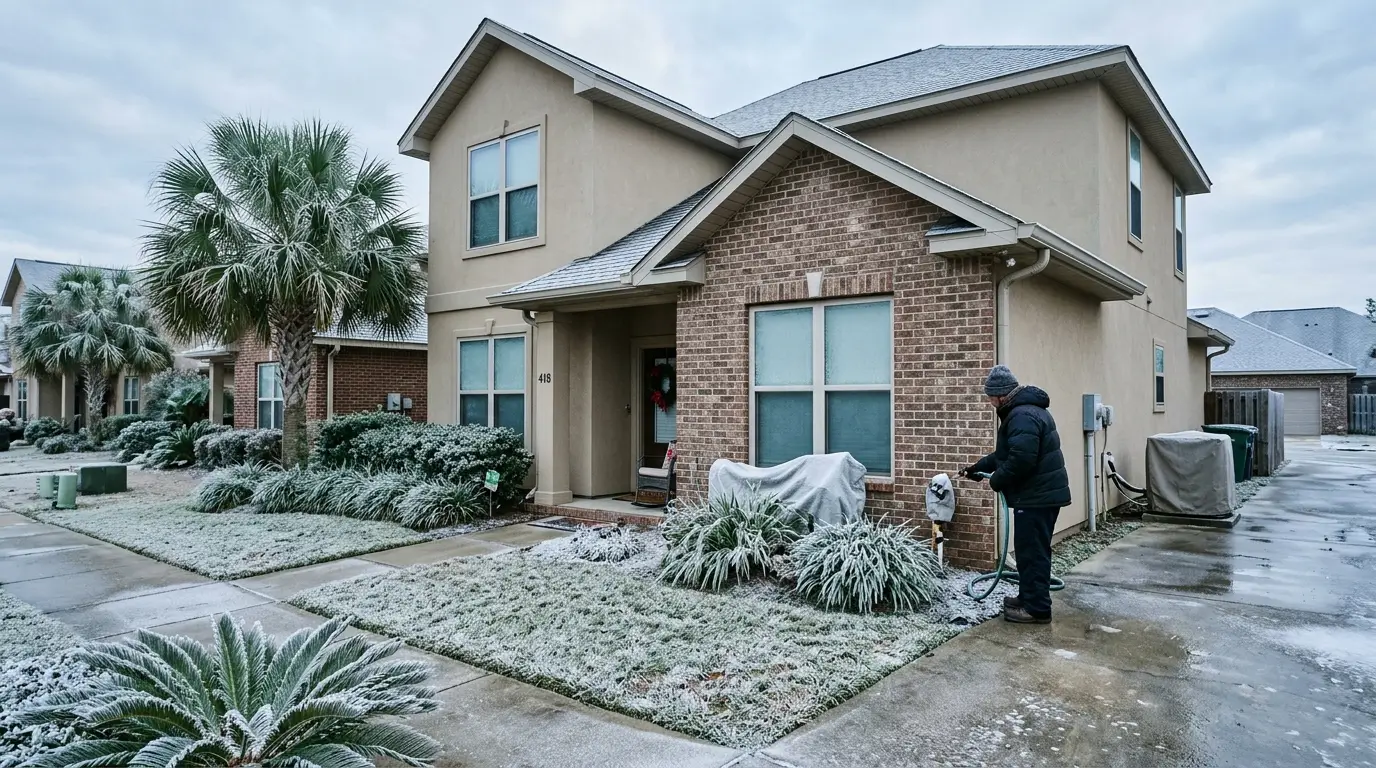
On January 21, 2025, Pensacola International measured 8.9 inches of snow, shattering the previous two-day record of 3.0 inches set in 1895. The next morning, Pensacola dropped to 13°F, breaking its daily record low. Homes built for heat and humidity, not hard freezes, met some of the coldest weather their owners had ever seen. Winter is coming again, and the lesson for rental owners is simple: a freeze that happens once every few years still deserves a plan.
Key Takeaways
- NWS recorded 8.9 inches of snow at Pensacola International on January 21, 2025, and Pensacola fell to 13°F the next morning.
- ECUA recommends insulating pipes in unheated areas, disconnecting and draining hoses, running a trickle of water, and protecting backflow assemblies.
- IBHS advises keeping the thermostat at least 55°F, opening cabinet doors, and letting faucets drip during extreme cold.
- DOE cautions against manually setting back a heat pump’s thermostat if it triggers backup heat, and emergency heat is for equipment failure.
- Vacant units are the biggest risk, and every property deserves a second walk-through after the thaw.
A Rare Event Deserves a Plan
The Pensacola News Journal reported that after a sustained cold weekend, local plumbers ran emergency calls for frozen spigots, burst lines, and failed outdoor fixtures. One plumbing office said that on many calls, residents had put covers on their spigots and the pipes still froze and busted, and that many people don’t think winterizing is needed here. The cost of that assumption adds up quickly. IBHS estimates that a small crack in a pipe can release up to 250 gallons of water a day. For a landlord, a burst pipe in a rental that nobody notices for a day or two is a very expensive afternoon.
Before the Forecast: Walk Every Property
The Emerald Coast Utilities Authority gives local, practical steps: insulate pipes and faucets in unheated areas such as garages, crawl spaces, and attics, disconnect and drain outdoor hoses, and wrap any backflow assembly, since extended freezes can burst the body of the device. Properties with irrigation systems or pools often have these assemblies, and they sit outside where the cold hits first. IBHS adds that owners should insulate exposed pipes and vents, caulk and seal exterior windows and doors, and add weatherstripping where daylight shows around frames.
Because covers alone didn’t save every spigot, go a step further where you can. If an outdoor faucet has an interior shutoff, closing it and draining the line is more reliable than a cover. Know where the main water shutoff is at every property, label it, and tell tenants where to find it. A tenant who can stop the water in thirty seconds saves you thousands.
During the Freeze: What to Tell Tenants
Send a short message before the cold arrives. ECUA recommends running a thin trickle of water from the faucet farthest from where the water line enters the house. IBHS and the Red Cross both advise opening kitchen and bathroom cabinet doors so warm air reaches the plumbing, and the Red Cross also suggests keeping garage doors closed and holding the thermostat at the same temperature day and night. IBHS sets the floor at 55°F.
Tell tenants what to do if the water stops or a pipe bursts: shut off the water to the affected area or the main valve, and contact maintenance right away through the tenant portal. If a pipe is frozen but intact, apply gentle heat with warm towels, a hair dryer, or a heating pad, and never use an open flame. The Red Cross also notes that space heaters are most often responsible for home heating fires, so remind tenants to keep them clear of anything flammable. Our tenant resources page covers how residents submit maintenance requests.
Heat Pumps and Thermostats
If a rental heats with a heat pump, the Department of Energy advises against manually setting back a heat pump’s thermostat if doing so brings on the backup heating system, so ask tenants to hold a steady temperature during a cold snap. It’s also worth explaining what the thermostat displays. Carrier notes that auxiliary heat comes on automatically when the heat pump needs help, which is normal in cold weather, while emergency heat is a manual setting that shuts the heat pump off entirely and uses only backup heat. Tenants should leave it on normal heat unless the system has failed.
Vacant Units Are the Biggest Risk
An empty rental has no one to hear a dripping pipe. Kentucky Farm Bureau, summarizing IBHS and industry guidance, advises keeping the thermostat at a minimum of 55°F even when a home is unoccupied, and turning off and draining the water supply if the home will sit vacant for an extended period. IBHS also suggests a monitoring system that sends notifications if indoor temperatures dip below 55°F. Schedule an in-person check during and right after any freeze, and ask your insurance agent how your policy treats freeze damage in an unoccupied or unheated home.
After the Thaw
The damage doesn’t always show during the freeze. The Pensacola News Journal reported that calls kept coming through the following Monday as the region thawed and people found broken irrigation systems and pipes around outdoor spigots, and that a plumber expected pool equipment calls from people who had turned pumps off. Walk each property again once temperatures rise: check outdoor spigots and irrigation, look at ceilings and cabinets for stains, confirm pool equipment is working, and watch for unexplained water use. Photograph anything you find and report it to your insurer promptly.
FAQ
- NWS reports Pensacola dropped to 13°F on the morning of January 22, a daily record low, after a record 8.9 inches of snow the day before.
- Insulate pipes in unheated areas, disconnect and drain hoses, run a trickle of water from the faucet farthest from the water line, and wrap backflow assemblies.
- IBHS recommends at least 55°F, and Kentucky Farm Bureau advises draining the water supply if a home will be vacant for an extended period.
- No, not unless the system has failed. Auxiliary heat comes on automatically, while emergency heat shuts off the heat pump and uses only backup heat.
Plan Now, Before the Next Freeze
Gulf Coast freezes are rare enough to be forgotten and serious enough to be expensive. A short checklist, a clear tenant message, and a plan for vacant homes cost far less than the repairs after a burst pipe, and our ROI calculator can help you build a repair reserve into your numbers.
Want help before the next cold snap?
If you’d rather have someone watching the forecast and lining up vendors, our Pensacola property management team coordinates maintenance requests and communicates with residents and vendors for owners across the area. You can also meet our team, including our maintenance coordinator.
Pensacola Property Management